
Founders
Todd Hawley
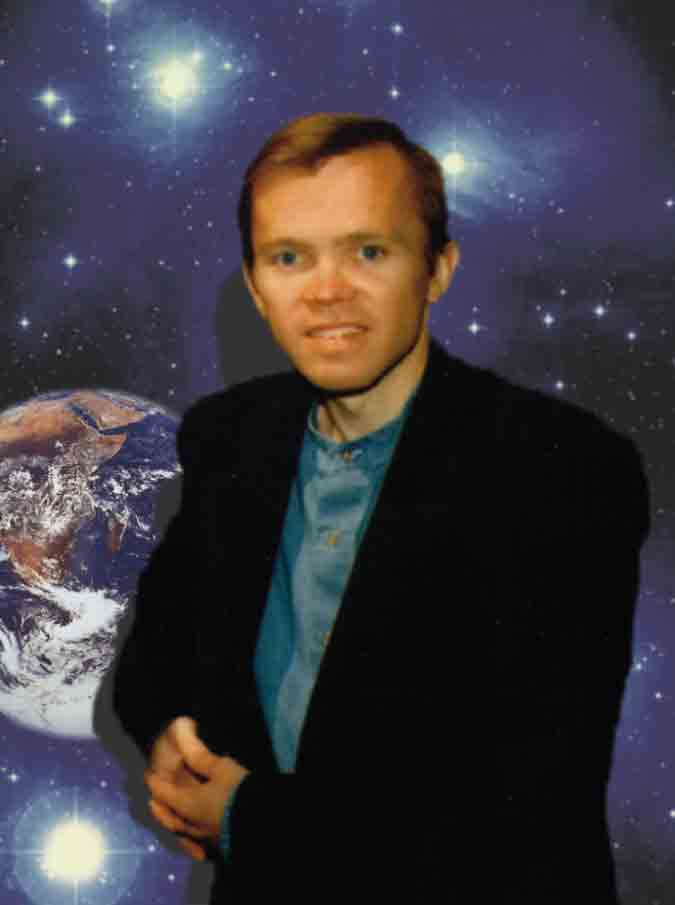
SEDS Co-Founder · 1961–1995
Todd B. Hawley was born on April 13, 1961, one day after Yuri Gagarin's historic flight became the first human spaceflight in history, a coincidence that friends and colleagues would later note as fitting for a man who devoted his life to human space exploration. As an undergraduate at George Washington University, Hawley started the school's SEDS chapter, and in 1982 he joined Peter Diamandis and Bob Richards in founding SEDS-USA as a national organization. He went on to chair SEDS from 1983 to 1985, guiding the young organization through its formative period of growth.
Hawley earned a B.A. in Russian Studies and Economics and an M.A. in Space Policy, both from George Washington University, and conducted substantial research on solar power satellites during his career, work that earned him the 1988 Aviation Week and Space Technology Laurel and the 1989 Space Industrialization Fellowship Award.
In 1985, Hawley joined Diamandis and Richards in establishing the Space Generation Foundation, serving as its first executive director and using the role to build a global network of young space professionals and advocates. That work culminated in 1987, when the three co-founded the International Space University at a meeting at MIT - an idea for a truly international, interdisciplinary space institution that Hawley had championed from the earliest planning stages. He became ISU's founding chief executive officer and a faculty member in its Space Humanities Department, and is credited with successfully managing the university through its critical early years, including its transition from a summer-session program to a request for a permanent campus.
Hawley's contributions to the field were further recognized with the 1993 Space Frontier Foundation Pioneer Award and, in 1995, the K.E. Tsiolkovsky Medal – one of the highest honors in international space advocacy, named for the father of astronautic theory.
Todd Hawley died on July 11, 1995, at the age of 34. He did not live to see the full scope of what SEDS, the Space Generation Foundation, and ISU would become, but each carries his imprint into the present. Colleagues remember him as the connective tissue between Diamandis's ambition and Richards's technical grounding, focusing on the durability of the institution and its long-term vision.